|
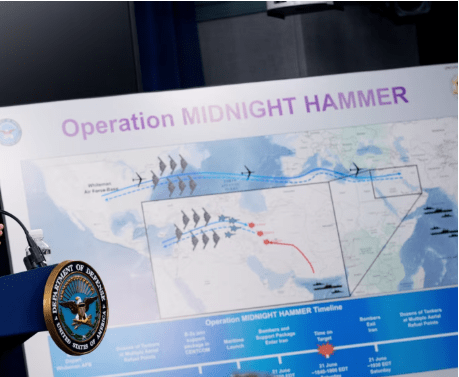
So much for TACO (Trump Always Chickens Out). Saturday he released a surprise attack on Iran. He launched Operation Midnight Hammer, bombing nuclear sites in Iran.
The US entered the fray in the Middle East over the weekend, dropping 14 30,000-pound bunker buster bombs on three separate Iranian nuclear sites late Saturday. Tomahawk missiles were also launched from US submarines. With the U.S. bombing some of Iran’s nuclear sites over the weekend, uncertainty in the Middle East conflict is growing. It will take a while to determine the full extent of the damage and the degree to which Iran’s nuclear ambitions have been set back by US and Israeli airstrikes. The White House claimed the Operation was a success.
After markets opened Sunday evening, we saw the moves you might expect – a pop in oil and gold prices, and a decline in equity futures. But they weren’t large, and markets have largely retraced those initial moves since. Further moves will depend on how, when, and where Iran responds to the US joining the attack. Options range from attacking US military bases in the region to attempting to disrupt the flow of oil through the Strait of Hormuz. It is estimated that around 20% of global oil and liquified natural gas consumption passes through this strait daily. If the oil and gas can’t make it through this strait, supply will fall significantly and push up oil and gas prices. The good news is that many intelligence and commodity experts expect the strait to remain open, as much of the oil leaving it is Iranian oil headed to China. Pressure from the world’s two largest countries could reverse any closure. The strait is also used to import food to the Middle East. Closing the strait could also be seen as an act of war against neighboring countries in the region. The impact of a closure to the United States would be limited. Perhaps for these reasons, oil prices have been somewhat contained even with the threat of closure. A broader escalation of the conflict, however, could impact oil prices, so investors will be watching this closely
Investors and investment markets do not like uncertainty as it clouds economic outlooks and earnings forecasts. However, when it comes to Middle East concerns, the market’s have history to call on. Conflicts in the Middle East are unfortunately not a new phenomenon. What we typically see initially during times of war or conflict in the Middle East are rising oil prices, falling stock prices and a surge in safe haven buying in investments such as bonds and gold. The U.S. dollar also tends to do well in these scenarios. While no one knows what will happen this time, this investment picture seems reasonable. That, however, has not been the investment market result at least yet.
Historically, geopolitical events tend to be short-lived in markets. For investors, this means they should stay focused on their long-term goals and objectives. Markets can be volatile as investors digest new information, but over the longer-term, markets tend to rebound quickly. Abandoning long-term objectives by getting out of the market after a sell-off and missing the rebound can set back investment goals. In these times of uncertainty, I stress the importance of diversification in portfolios. Diversification can help smooth returns by not having too much exposure to any one risk. Some stocks will likely outperform during a Middle East conflict.
I continue to monitor global developments closely. As we are all seeing now, the flow of news with the Middle East conflict is fast and unpredictable. Anticipation, expectations and speculation is increasing quickly. What’s next? And, What will an Iran retaliation look like? Those questions fuel investor FUD (fear uncertainty & doubt). Discipline, and perspective remain the best tools for navigating an increasingly complex world.
|