|
Recapping Last Week
U.S. equity indices ended with mixed performance after a turbulent week in which President Trump’s pursuit of Greenland threatened to upend trade relationships. After opening the shortened trading week with a sharp 2% drop, the S&P500, Nasdaq Composite, and Russell 2000 indices recovered most of their losses. Although tensions between the U.S. and Europe eased somewhat by week’s end, investors’ move toward non-U.S. assets gained further momentum. The U.S. dollar suffered its worst weekly decline since June, while precious metals continued to soar. Gold, the traditional store of value in unstable times, jumped 8% to $4,980 and silver leapt 14% to break above $100 for the first time. Selling pressure in U.S. Treasuries pushed the 10-year yield up to a five-month high of 4.3% before backing off slightly. International equities have seen strong inflows in 2026, especially emerging markets which tend to benefit most from a weak dollar. U.S. sector performance was uneven, with rising oil prices supporting energy’s 3% gain while rate- sensitive sectors like financials, utilities, and real estate all fell more than 2%. Technology component Intel plunged 17% after the company posted a quarterly loss and worse-than- expected outlook. Turning to economic data, long-delayed core PCE price index data from November revealed a 2.8% YoY increase, only a modest uptick from the prior month. However, the recently released CPI report suggested that December’s core PCE reading—which will be released on February 20—could show a 3.1% rise YoY. U.S. business activity remained in expansion territory this month, though signals of slowing momentum emerged. The S&P Global Flash Composite PMI stood at 52.7 but job growth has stagnated while higher input costs have pushed up selling prices. The final January consumer sentiment index rose to a five-month high of 56.4 on economic optimism, though this figure is still 20% below its level a year ago. One-year inflation expectations fell only slightly to 4%.
Internationally, the Bank of Japan kept rates unchanged at 0.75% while retaining its hawkish inflation and economic growth forecasts. Prior to that decision, Japanese bond yields jumped to 27-year highs after Prime Minister Takaichi pledged to cut the consumption tax rate. This move stoked fears that the country could struggle to service its debt- to-GDP ratio, the highest among developed economies, and thus its financial stability. In China, GDP growth met the government’s 5% target last year largely by snatching a record share of demand for global goods, a strategy seen by many economists as unsustainable in the long run. Domestic consumption continued to weaken as the year went on. Finally, Eurozone business activity was stable at 51.5 this month, while UK inflation rose to 3.4% YoY in December but was not expected to derail rate cuts anticipated for later this year.
Current View
No new rate cuts was no big deal yesterday. But there was almost a big deal yesterday: The S&P 500 almost closed above 7,000 for the first time ever. The major index hit an intraday high of 7,002, but couldn’t hold the record high and closed slightly lower. The real big news of the day, and in the days and weeks ahead, is earnings. Three mega-cap tech stocks announced their quarterly earnings after the close yesterday and have triggered a sharp sell-off today. While Tesla and Meta gave the market reasons to buy the stocks, Microsoft offered a disappointing report and has so far been a major catalyst behind the selling pressure – especially in the software sector. The computer software industry group is now in a bear market. This is the most significant crack in the overall bull stock market that began in October of 2022. The software stock group is now down more than 20% from its previous high and on pace for the worst month since 2008.
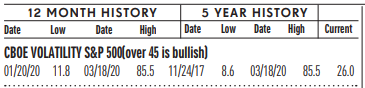
I think the daily flow of financial, political and geo political news will have contribute to inordinate stock market volatility this year. At least that has been the case so far. Now we have meaningful shifts in the stock market and rotation from tech, at least software, as noted above.
|