ERPE Excerpts 1.15.2026 CES 2026: Robots

CES 2026: ROBOTICS

A new era of robotics was introduced at CES 2026 last week: robots powered by physical AI. Robots and AI tools dominated the CES show floor this year. The spotlight on robots continues to shine as the sector is redefining how we live, work and interact. This year’s CES showcased a remarkable array of innovations, underscoring how robots are becoming deeply integrated into everyday life, from home automation and healthcare to hospitality and logistics.
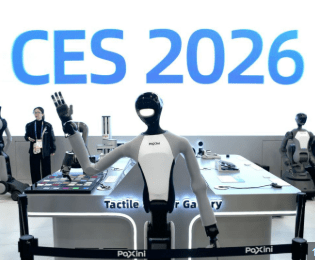
Robots are no longer confined to industrial settings. They’re entering our homes, offering practical assistance and even emotional support. Tombot’s Jennie, for example, is a robotic emotional support dog – and a big hit at CES 2025. It is designed to comfort individuals with dementia and other cognitive conditions. Then there’s Segway’s Navimow and Daedong’s multifunctional agricultural robot are transforming outdoor maintenance and farming with precision and autonomy. Robots are also making waves in the service industry. Richtech Robotics’ Adam, a robot bartender and barista, is redefining hospitality experiences. In retail, Kroger’s aisle-scanning robots streamline inventory management. Humanoids are said to be gaining traction. CES 2026 dedicated a Robot Pavilion to unveil humanoid robotics innovations.
I first wrote about CES (Consumer Electronic Show) in 2015. CES serves as the global launchpad for new consumer tech, attracting massive crowds and media, and has evolved from showcasing basic electronics to covering the entire tech landscape, including automotive, health, and smart home devices. Here’s the stats for CES 2026:
Back to the star – the Robots…
Robots on display at CES 2026 demonstrated how they are making homes smarter, enhancing agricultural productivity and improving safety and efficiency in factories. The rise of Robotics-as-a-Service is also democratizing access, allowing smaller businesses to adopt automation without heavy upfront investment. Here’s a clip from the show: CES-ROBOTS…
Industry Outlook
The robotics industry is undergoing rapid transformation, fueled by advances in artificial intelligence, automation and shifting global labor dynamics. This year, the U.S. market for home robots is roughly $1.1 billion while the global robotics market is projected to reach $178.6 billion by 2030.
Combining AI with robotics was a CES 2024 highlight. More so this year. The advancement in AI technology has not only given robots better “brains,” it’s enabled new levels of autonomy and given rise to an ambitious vision for our robot-filled future. Here’s a look at the “future”:
LG Electronics (LG) showed off its LG CLOiD™, an AI-enabled home robot that was be demonstrated publicly for the first time at CES 2026. Designed to perform and coordinate household tasks across connected home appliances, CLOiD is built to reduce the time and physical effort required for everyday chores. The system represents LG’s latest development in AI-based home robotics and smart home platforms.
More CLOiD… LG company showed its home helper concept folding and sorting laundry, fetching drinks from the fridge, putting food in the oven and retrieving a set of lost keys.  The president of the LG Home Appliance Solution Company said, “The LG CLOiD home robot is designed to naturally engage with and understand the humans it serves, providing an optimized level of household help.”
Not all robots need arms. Some just need legs. Roborock’s new Saros Rover works like any other robot vacuum cleaner, but with new body parts. It hums along the floor, sucking up dirt and other debris. But the Saros Rover sets itself apart thanks to its legs, giving it the ability to stand and move up stairs.
CES 2026 not only showcased the latest in robotics but also underscored a broader trend: the evolution of robots from tools of efficiency to companions of empathy and intelligence. As nations invest in robotics as a strategic priority and companies continue to innovate, the future promises a world where robots are not just machines — but meaningful parts of our daily lives.

TAKING PERSPECTIVE…

Proper Perspective:  In our hectic and often hard to comprehend world, it is very easy to lose perspective. You may agree it is sometimes difficult to see the big picture. The media often doesn’t help with this, but unfortunately instead encourages us to see things in a most negative light. Here is hopefully a pause to gain positive perspective.
Famous Quote For Today:  “We are seeking total peace and not a simple truce or cease-fire. (Guatemalan Guerrilla War)”
~~ Jorge Serrano, 1991
Today on Markets History – On this day in 1987, the New York Stock Exchange racked up daily volume of over a quarter-of-a-billion shares for the first time.

MARKET ANALYSIS

INDICATORS OF INTEREST:
  • Market’s Current Signal: Confirmed Uptrend.  Analysis of the stock market over 130 years of history shows we can view it in terms of three stages -market in uptrend, uptrend under pressure and market correction.  Since the 1880’s, this perspective has led to investment out-performance relative to market indexes. This is due to trend analysis which determines risk reducing, return enhancing market entry and exit points. The U.S. stock market’s current signal indicates the market is in Confirmed Uptrend. That officially happened April 22 and is still intact. This has been the fastest market rebound from a bear market low in history. The uptrend is remains. October 12, 2025 was the 3rd anniversary of this bull market.
The Stock Market Trend: Confirmed Uptrend. The stock market powered higher Tuesday, April 22 and the Nasdaq and S&P 500 confirmed new rally attempts. That follow-through signaled a Confirmed Uptrend. In late June the major stock market indexes reclaimed levels set in late February and significantly above the pre-“Liberation Day” level. Until late October, the major indexes were making new all-time record highs. October 28 was the 36th new high of 2025 for the SP 500. Volatility has spiked in the U.S. equity market since with a trend breaker session on November 20. As is the new norm, the BTD (buy the dip) behavior resulted in a reversion back to a bullish trend in the ensuing days. While the SP 500 gained again in the last quarter of the year, it was noticeably flat as the last three month closing levels for the broad index were essentially unchanged. Convincing stock market strength in the first 10 trading days of the new year shows the bull on Wall Street is alive a well ….
Here are key market levels as of Monday, January 12:
Recapping Last Week
U.S. equity indices completed the first full week of 2026 in positive territory as investors reacted to softer-than-expected labor market data. The S&P500 and Nasdaq Composite indices each gained more than 1.5% while equal-weight and value themes continued to outperform. The Russell 2000 jumped 4.6% on hopes for rate cuts and a strong showing from financial stocks. For S&P500 sectors, consumer discretionary rallied 5% as retailers soared, while basic materials saw nearly similar gains as precious metals once again approached record highs. Gold futures rose 4% and silver spiked more than 10% in extremely volatile trading. OPEC’s decision to leave oil output levels unchanged at a brief meeting last weekend was supportive of crude, which finished the week higher by 2.5%. U.S. Treasury yields fell after December’s non-farm payroll growth came in below expectations at 50,000. At the same time, the unemployment rate ticked lower to 4.4% despite a rise in layoffs attributed mostly to federal government workers and technology companies. Overall, the data suggested that labor demand continued to fade without rapid deterioration, even as economic growth appeared robust. Fed funds futures still project two rate cuts in 2026, although the first isn’t being priced in until June. In other economic news, ISM manufacturing PMI slumped to 47.9 in December, while services PMI rose to 54.4, its highest level since October 2024. Tariff impacts were common themes among survey respondents as the price indices remained elevated. This month’s preliminary consumer sentiment index improved slightly but still sat near record lows. One-year inflation expectations were flat at 4.2% while the long- term view edged up to 3.4%. Delayed U.S. trade data revealed a deficit of just $29.4 billion in October, down 39% from the prior month and the lowest level since 2009. The declining imbalance could provide a much-needed boost to Q4 GDP, considering the expected negative impact from the government shutdown. Another long-delayed report showed that U.S. worker productivity grew sharply in Q3 as business investment in artificial intelligence depressed labor costs.
Internationally, inflation in Germany and the wider Eurozone slowed to 2% YoY last month, rekindling hopes that the European Central Bank could resume rate cuts this year. German retail sales fell 0.6% MoM, a sharp reversal from prior readings that raised concerns about consumer spending. China’s CPI accelerated at the fastest pace in nearly three years, largely driven by supply shortages of hard-to-obtain foods during the cold winter. However, producer prices continued their deflationary streak, indicating soft domestic demand for goods.
Current View
Stock market veterans know that trading in January can be a bewildering experience. Yet overall, yesterday’s action hinted that the general uptrend remains in force. Yesterday, the Nasdaq endured the biggest hit among key stock market benchmarks. Its 1% drop in higher volume constituted a true distribution day, or genuinely intense professional selling. The Nasdaq composite’s 1% fall was also its largest decline so far in 2026. After a 20.4% advance in 2025, perhaps no one would be surprised. All Mega-cap Eight firms, which together account for as much as 47% of the Nasdaq’s total market value, surrendered ground Wednesday. Yesterday’s action offered a fitting example of how stiff crosswinds on Wall Street can make the job a real challenge. I think daily flow of financial, political and geo political news will have contribute to inordinate stock market volatility this year. Here’s my 2026 OUTLOOK.
  • Industry Group Strength:  BULLISH. As of yesterday, 109 out the 197 groups I monitor are up year-to-date. 88 are down.
  • New Highs vs. New Lows: BULLISH.  In yesterday’s session, there were 157 new 52-week highs and 80 new 52-week lows.
  • Dow Dividend Yield:  BEARISH. The current yield for the Dow Jones Industrial Average is 2.05%. The 10-year Treasury now 4.03%.
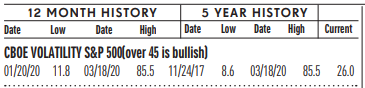
  • Volatility Index: BEARISH. Volatility has been volatile. The “VIX” is now 13. The index is also known as the “Fear Index.” It is considered a contrarian indicator and therefore viewed as bullish as it rises indicating investors are becoming more fearful. The VIX:
502fdd07-23bc-47a7-ad04-cc3b3f2387db image
  • Fear / Greed Index:  BEARISH.  Investors are driven by two emotions: fear and greed. Too much fear can create a condition of oversold/ undervalued stock prices. Too much greed can result in overbought/overvalued stock prices. The AAII Investor Sentiment Index is now neutral.   BE FEARFUL WHEN OTHERS ARE GREEDY. At 66, the Fear & Greed Index is up from 40 four weeks ago.
CLICK VIDEO FOR MORE ON THE “FEAR & GREED INDEX”
  • Bull / Bear Barometer:  BEARISH. This secondary market indicator should also be viewed with a contrarian perspective. As of yesterday, according to the latest survey of stock market newsletter writers by Investor’s Intelligence, the bullish tally is 53.6%, down from 59.3% two weeks ago. The bears are 147.8%, up from 14.8% two weeks ago. Consider this a contrarian indicator because the crowd is often wrong at market tops and bottoms. In other words, extreme bullishness has been seen near several market tops in the past, while extreme bearishness has been seen at market bottoms.
  • Put / Call Ratio: BEARISH. The ratio of put-to-call options is 0.69, down from 0.76 two weeks ago. The put-call ratio tracks the mood of what options investors are doing, not just saying. They typically buy puts if they think a stock will decline and calls if they think it will rise. If they’re buying lots of puts, they see the market declining. And if they’re loading up on calls, they’re generally bullish. Historically, market bottoms occurred when the reading spikes to 1.2 or more. Market tops are often made when the reading is 0.6 or less. Note how reliable this is with respect to the February record low coinciding with the market high. Keep in mind this is also a contrarian indicator.

ECONOMIC UPDATES

Global Economic Indicators & Analysis:
POSITIVE INDICATORS
Initial Jobless Claims Down:  The number of Americans filing new applications for unemployment benefits unexpectedly fell last week, but the drop was likely due to ongoing challenges adjusting the data for seasonal fluctuations around this time of the year. Initial claims for state unemployment benefits dropped 9,000 to a seasonally adjusted 198,000 for the week ended January 10, the Labor Department said on today. Economists polled by Reuters had forecast 215,000 claims for the latest week.
Retail Sales Up: A long-delayed report on sales at U.S. retailers in November signaled that the holiday shopping season got off to a good start and suggested the U.S. economy was still growing at a healthy clip. Retail sales rose a stronger-than-expected 0.6% in November, the government said yesterday in a report that was originally set to be published a month ago but was delayed by the recent government shutdown. The increase in sales was the biggest in four months and offset a small decline in October. Sales rose at most retail stores in November. The biggest increases were at car dealers, home centers, gas stations and clothing stores. Perhaps the most critical category in the retail report, restaurant sales, advanced 0.6% in November. The U.S. economy has kept growing at a surprisingly strong pace despite high tariffs, lingering inflation and a big slowdown in hiring. Steady consumer spending, especially among wealthier households, has been a big reason for that.
CPI Cooling: Core U.S. consumer prices rose less than predicted in December, reinforcing hopes that inflation is tempering as the Federal Reserve contemplates its next move on interest rates. Excluding volatile food and energy prices, the consumer price index showed a seasonally adjusted 0.2% gain on a monthly basis and 2.6% annually, the Bureau of Labor Statistics reported Tuesday. Both were 0.1 percentage point below expectations. Though they look at both measures, Fed officials consider core inflation a better long-run gauge of where inflation is heading. On a headline basis, the CPI posted an increase of 0.3% for the month, putting the all-items annual rate at 2.7%. Both were exactly in line with the Dow Jones consensus estimate.
NFIB Small Business Optimism Up: The NFIB Small Business Optimism Index rose 0.5 points in December to 99.5 and remained above its 52-year average of 98. Of the 10 Optimism Index components, two increased, three decreased, and five were unchanged. An increase in those expecting better business conditions primarily drove the rise in the Optimism Index. The Uncertainty Index fell 7 points from November to 84, the lowest reading since June 2024.
ADP Employment Numbers Report Up: ADP said businesses created 41,000 jobs in December, suggesting a weak U.S. labor market showed mild improvement heading into the new year. Wall Street forecasters had predicted a 48,000 increase in private-sector jobs. The health of the jobs market is the biggest worry of the Federal Reserve as it weighs whether to cut interest rates again in 2026. Hiring has slowed rapidly since the spring, and employment even fell for the first time since the pandemic. The latest ADP report suggested the deterioration in the labor market may have eased. Employment rose in two of the last three months.
Jobs Market Showing Some Strength:  The economy created a modest 50,000 jobs in December — the second increase in a row — in a sign a weak U.S. labor market might be stabilizing after a steep slowdown in hiring last year. The unemployment rate also fell from a four-year high. The increase in hiring was padded by higher government employment. The private sector only added 37,000 new jobs last month. The unemployment rate slipped to 4.4% from a revised 4.5% in November. The lukewarm December employment report, at least on the face of it, could ease worries at the Federal Reserve about a crumbling jobs market. Fed officials are weighing a fourth straight interest-rate cut in January, but the December jobs report is unlikely to give them a clear sign on what to do.
PMI Up: The Institute for Supply Management said yesterday that its services-sector PMI rose to 54.4% in December from 52.6% in the prior month. That’s the highest level since October 2024 and the third straight month of expansion. Economists polled by the Wall Street Journal had expected the index to drop to 52.2%. The employment index expanded for the first time in seven months. The new-orders index jumped 5 percentage points to 57.9 in the month. The prices index fell 1.1 percentage points to 64.3 in December. That was the lowest reading since March and perhaps a sign that tariff-related price pressures were abating.
US Productivity Up: One of the biggest drivers of a strong U.S. economy — worker productivity, — surged over the summer and in early fall, raising hopes that investment in artificial intelligence is beginning to pay off. U.S. productivity accelerated to a 4.9% annual clip in the third quarter, the government said last Thursday. That’s the fastest pace in two years. The gain was in line with forecasts of economists surveyed by the Wall Street Journal. Productivity has been steadily improving, and some economists expect the trend to continue. Unit labor costs fell 1.9% in the third quarter, a sign that labor costs are not driving inflationary pressures.
US Trade Deficit Down: The U.S. trade deficit plummeted 39% in October to reach the lowest level in 16 years, but the steep drop stemmed from an ongoing gold rush of sorts as well as efforts by businesses to work around high tariffs. The trade gap shrank to $29.4 billion in October from $48.1 billion in September, the government said last Thursday. The October report was delayed by the federal shutdown. A combination of surging U.S. exports and dwindling imports explained the big drop in the deficit. The last time the trade gap was so low was in 2009. Exports rose 2.6% in October. Imports fell by 3.2% in October to the lowest level in nearly two years. Still, big monthly increases and decreases in the trade deficit in 2025 have done nothing to reverse a long-term of high and rising U.S. trade deficits. In the first 10 months of 2025, the trade deficit totaled $782.8 billion, up 8% from $726.8 billion in the first 10 months of 2024.

WEAK INDICATORS

US Manufacturing Down: A closely watched index that measures U.S. manufacturing activity fell to 47.9% in December, the Institute for Supply Management said Monday. This is the lowest reading of the year and the 10th straight month of contraction in the factory sector. Any number below 50% signals contraction. Economists surveyed by the Wall Street Journal were expecting some stability in December, with the index forecast to inch up to 48.3% from 48.2% in the prior month. “We still see weak demand,” with uncertainty from tariffs holding down activity, said Susan Spence, chair of the ISM’s manufacturing survey committee. The ISM surveys executives every month about how their companies are doing. Business isn’t getting any better, they say.
PPI Up: The cost of wholesale goods and services rose during the government shutdown and showed the persistence of inflation pressures in the guts of the U.S. economy. A combined report on producer prices showed a 0.2% increase in November and a 0.1% rise in October, the government said. The two months were combined into one report due to the recent federal shutdown. The 12-month increase in wholesale prices — where inflation tends to show up first — also climbed to 3% from 2.8%. The PPI adds to the Wall Street’s concerns that the Federal Reserve might refrain from cutting interest rates again later this month.
Call me if you have any questions.  I am always happy to help!
John J. Gardner, CFP®, CPM®.
Blackhawk Wealth Advisors, Inc.
3860 Blackhawk Rd. Ste. 160 Danville, CA. 94506
Phone: 888-985-PLAN · Email: jg@blackhawkwealthadvisors.com